
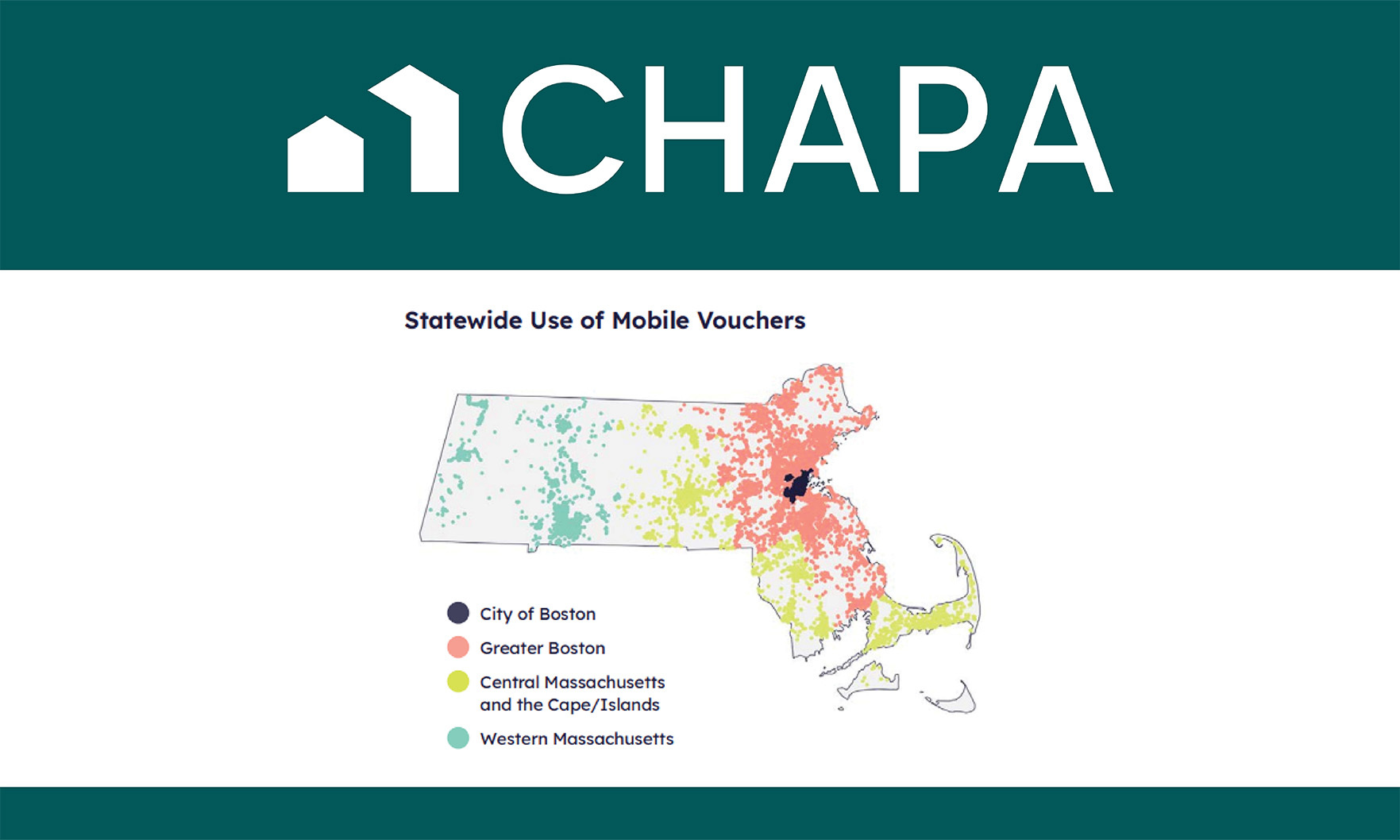
Nearly 9.2% of Massachusetts renter households rely on Housing Choice Vouchers, far above the national average of 5.2%, according to a new study from the Citizens’ Housing & Planning Association.
CHAPA compiled the first-of-its-kind report using analyses from New York University’s Furman Center detailing data from the U.S. Department of Housing and Urban Development.
Research revealed that over 92,000 Massachusetts households relied on HCVs as of September 2025. And these vouchers-reliant households were not concentrated in Boston’s urban center. Only 18% of mobile vouchers were used in the city, with the rest distributed throughout the state.
Seniors or people with disabilities claimed the most HCVs in Massachusetts, and a majority of “work-able” households did work, the study found. CHAPA defined “work-able” households as those with at least one non-elderly, non-disabled adult member or, if the head of household was disabled, another non-elderly adult household member with wage income.
About 45% of HCV households in Massachusetts classified as “work-able,” mirroring the national percentage of 47%.
“One of the biggest challenges in understanding the successes or weaknesses of a long-standing support program is identifying common threads from the unique stories of tens of thousands of people,” said Jennifer Gilbert, Musicant Cohen executive firector of CHAPA’s Housing Policy Action Center.
She continued, “This report provides a more in-depth picture of the HCV program in Massachusetts and the voucher holders who rely on it for an affordable place to call home. HCVs are an undeniably critical part of our safety net in Massachusetts, providing stability and more choice in where to live for over 90,000 households. The data shows the program’s direct impact in addressing our state’s housing affordability challenges, promoting housing access and choice across the state and easing the burden for many households with very low incomes, including working families.”